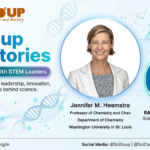
SciSoup Lab Stories: A Conversation with Prof. Jennifer M. Heemstra
- SciSoup
- November 1, 2026
RATNESHWAR THAKUR
Chemist Prof. Jennifer M. Heemstra, Charles Allen Thomas Professor and Chair, Department of Chemistry, Washington University in St. Louis, reflects on her journey into science, biomolecular research, scientific discovery, collaboration, mentorship, inclusive research environments, and communicating science with society.
A scientific journey does not always begin with certainty or follow a predictable path. Sometimes, an unexpected opportunity, an encouraging mentor or the freedom to explore can shape a lifelong passion for discovery. Prof. Jennifer M. Heemstra, Charles Allen Thomas Professor and Chair of the Department of Chemistry at Washington University in St. Louis, reflects this spirit of curiosity, perseverance and exploration.
Her journey into science began with an unexpected turn. Initially told that she was not particularly suited to science, she discovered her interest through Science Olympiad and the encouragement of her teacher, Dr. Marcia Sprang. Later, an opportunity to work in a chemistry laboratory during her undergraduate years introduced her to research and set her on the path to becoming a chemist.
Today, her research explores how biomolecules such as proteins and nucleic acids can be harnessed to develop technologies that benefit humanity. Beyond scientific discovery, she places great importance on collaboration, mentorship and building inclusive research environments.
In this edition of SciSoup Lab Stories, Prof. Heemstra reflects on the experiences and turning points that shaped her scientific journey, offering insights into the challenges, joys and lessons of a life in research. Discover the person behind the science through her story.
The Beginning
My journey into science really started with being told that I was not good at science. This happened as I was entering 9th grade and transitioning to high school. I wasn’t approved to join the science-intensive track at my school which would have involved taking Biology in that first year. The reasoning given was that my 8th grade science teacher said I was not skilled at science. While this could easily have been the end of any interest in science, something else happened in parallel – I had a challenging home life and so I was always looking for ways to not have to go home right after school.
Fortuitously, many of my friends (who were in the science-intensive track) had joined Science Olympiad, which had after school practice. They invited me to join, and I probably only went because it was something to do that would justify me staying busy after school. The teacher who coached Science Olympiad – Dr. Marcia Sprang – changed my life. When I joined, I didn’t feel like I belonged because I was the only student not taking a science class. However, Dr. Sprang pointed out that there was an event about rocks, and “Nobody takes geology, so you won’t be behind.” I started spending every afternoon studying the collection of 100+ types of rocks, and fell in love with science.
The starting point of this story is crucially important because, while painful and arguably unfair, being told I was not good at science freed me up to explore without anyone having expectations of me. Looking back, part of what made me love science was the opportunity to try it out for no other reason but that I was having fun.
Shaping a Scientific Career
The opportunity to do research completely changed my view of science. While I left high school with an interest in science, I wasn’t sure what I ultimately wanted to do with my life. At one point during undergraduate studies, I was planning to major in Political Science then go to law school and work in bioethics. Then I discovered chemistry research.
I got into this area of research by coincidence. I was working a few jobs to pay for college, and one of those was in the Organic Lab stockroom. I didn’t want to be a chemist, but I did need a night job. At that point, I was also required by my program to do research, but I had no idea how to find a research experience. Fortunately, during my evening job, we often got to talk with the graduate students who would be there to teach the lab sections. I had kind of enjoyed my Organic Chemistry course, so I thought perhaps they could help me find a research experience in a chemistry lab.
Fortunately, Prof. James Nowick gave me an opportunity. I spent at least the first year telling people “I’m working in this lab and I really love what I’m doing. I don’t want to be a chemist, but this is fun.” Through consistent encouragement from James and my labmates, I gradually came to the realization that I could actually be a chemist and that I could even go to graduate school.
Graduate school really taught me what it meant to be an independent scientist. I was fortunate to have another spectacular mentor – Prof. Jeff Moore – who gave us tons of freedom in the lab while also being there when needed for advice or motivation. This experience shaped how I run my own lab to this day.
I’d be lying if I didn’t also mention the many challenges, self-doubts, and obstacles that I encountered between then and now. However, these formative research experiences not only taught me how to be a scientist, but also gave me strong mentors who I relied on through all of these ups and downs.
Research Focus – Questions That Matter
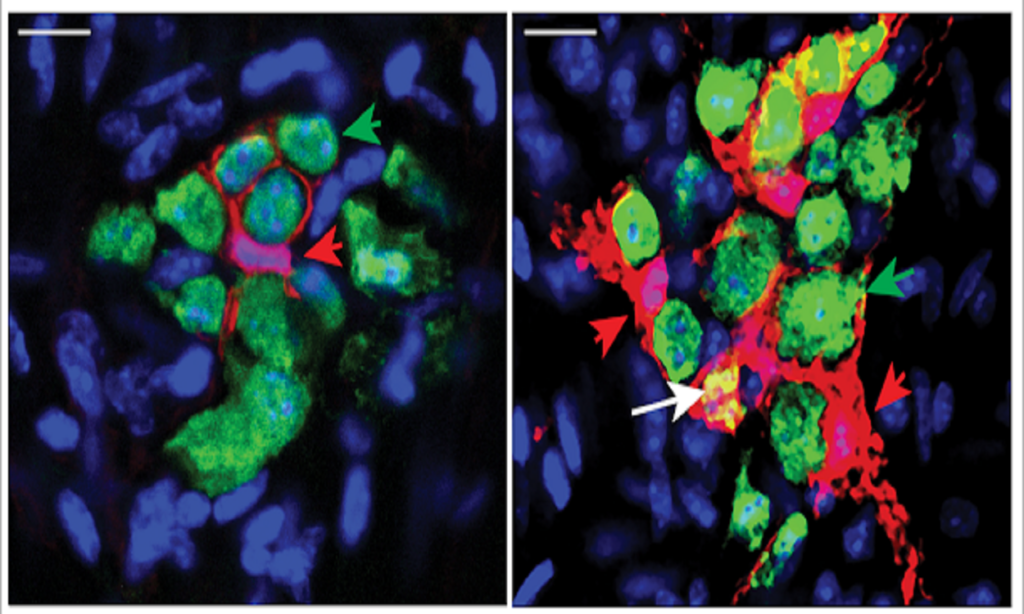
I’m excited about how we can leverage the capabilities of biomolecules such as proteins and nucleic acids, to create technologies that benefit humanity. Most recently, we have done this to create new detection methods for adenosine-to-inosine editing and double-stranded RNA. We’ve found that while researchers often engineer affinity reagents for these molecules, Nature can offer even better solutions. Thus, we’ve been able to repurpose proteins from organisms to make better detection reagents. This is fun not only for the impact, but in how it helps me to appreciate the exquisite capabilities of biomolecules.
Something that is particularly exciting right now is that we’re on the verge of seeing a few of our technologies be commercialized. We’ve formed partnerships with companies, and it is looking like in the next year or so, other researchers might be able to buy assays based on our technology and use those to accelerate their own research projects.
Interdisciplinary Collaboration
When recruiting new members to our lab, I often highlight that our work extends across a wide variety of fields and techniques, such that no single person has all of the knowledge needed to complete their project. As a result, our lab culture is one where it is essential to collaborate and appreciate the distinct set of experience and capabilities that each member brings to the team. While this is essential for the type of work we do, I also think it is outstanding preparation for future careers. My colleagues in industry frequently highlight the importance of team science, and it makes me happy that my lab members get that experience while in graduate school and postdoc.
We also frequently collaborate beyond our lab. The way we approach science is to find interesting problems and then pursue what we think is the best way to solve them. Often, this requires us to use techniques we haven’t learned yet. Sometimes someone in my lab wants to dive in and learn that new technique, but often we are more excited to work with a collaborator who is an expert in that area. At this point in my career, I have the privilege to only work with collaborators if I want to, and as a result, we only work with scientists who share our values of mentoring, teamwork, and kindness. So collaborating is really just spending time with wonderful people and learning about new science.
Memorable Discoveries and Breakthroughs
My most memorable breakthrough wasn’t mine, but that’s part of what makes it so fun. What I love most about my job is getting to work with early-career researchers and see them grow and thrive as scientists and people. So, I take much pride and joy in the ways that they drive the ideas that are foundational to our work.
In 2016, we started working in the area of adenosine-to-inosine editing. It started with a research idea that I had and that and that a first-year graduate student, now Prof. Steve Knutson, was working on. While pursuing this research, Steve hit a roadblock in that he didn’t have good ways to bind and enrich inosine-containing RNAs from the bigger pool of all RNA. But he found a very innovative solution. He realized that Nature had already solved this problem by evolving Endonuclease V enzymes, and that he could repurpose those as anti-inosine affinity reagents.
This set the foundation for not only Steve’s PhD research, but for future generations of lab members as well. We never actually came back to the initial research idea that had gotten us started in this area, and that’s okay, because we’ve gone in what I think are even more exciting directions thanks to the creativity of the people leading those projects.
Challenges and Advice
I’ve definitely had my share of challenges in my career – from the usual failed experiments and rejected grant proposals to more extreme setbacks like losing my postdoctoral offer on the day of my thesis defense and receiving a bad tenure vote. While none of these were fun, and some of them were very unfair, they’ve also shaped me into who I am now. Something that is a constant is how my mentors showed up to support me in times of challenge. This includes not only my undergrad, graduate, and postdoc research mentors, but also the many informal mentors I’ve been fortunate to build relationships with over my career.
My advice to early-career researchers is:
Build a support network. Find peers and mentors with whom you can share challenges and doubts as well as celebrate the victories when they happen. As you find these relationships, aim to be the colleague and friend that you would want to have.
Don’t let failure define you. I like to say that as a researcher you need to be a professional “fail-er” but that does not make you a failure. It’s critical to see failure as a piece of information (and sometimes it’s more informative about the system in general). Do an honest assessment of what happened and what you can learn, then make a plan for moving forward.
Allow yourself time to grow. Nobody has it all figured out at the start of their career (or really at any point in their career!) and that’s okay. If a career path feels intimidating to you, that’s because it will require you to grow and learn, but if you’re a scientist, you know how to do that. Don’t be afraid to step out of your comfort zone and try new things, and enlist your mentors and supporters to help set you up for success.
Science Communication – Connecting with Society
I believe that anyone whose research is funded by the government (and thus taxpayers) has an obligation to be sharing their science with those in society. However, this can come in many formats. There are certainly some who are extremely skilled in this area and have a large following on social media or other venues. At the same time, some of the most powerful science communication is with people that we already know well. This doesn’t get as much attention, but the highest impact communication someone engages in may be at the family dinner table or while enjoying hobbies with friends.
During the Covid-19 pandemic, I did a bit of science communication on Twitter, but really that was just repeating conversations that I found myself having with people like my physical therapist or family member about topics like how mRNA vaccines work.
Diversity, Equity and Inclusion
We still have far to go in this realm, but I’m especially encouraged to see an increasing commitment to positive mentoring and creating healthy cultures in research labs in STEM. These changes benefit everyone, but can have a disproportionately higher benefit for those who have historically been excluded from STEM. As an example, clearly communicating expectations helps everyone know how to succeed, but especially for a first-generation student who doesn’t have family members who can help them understand what is expected of researchers in a lab. Similarly, creating a positive culture where everyone feels welcomed and valued can improve everyone’s experience, but especially for those who enter science spaces not seeing their identities well-represented or who have faced biases or unwelcoming behaviour from others in STEM.
There is much progress that is still needed on multiple fronts. One aspect I think is particularly important is to shift the reward structure in science so that researchers who are working to increase diversity, equity, and inclusion are rewarded for this effort rather than having it risk slowing down their careers. This type of work is disproportionately performed by those who themselves have identities that are underrepresented in STEM, so creating a reward structure would also directly increase equity.
Looking to the future
I think we’re still just scratching the surface of the intricacies of how life works. I’m excited to see the next generation of scientists continuing to uncover what we don’t know, which leads to more great questions that they can pursue. In parallel, it is wonderful to see other scientists developing new technologies that allow us to pursue this knowledge.