When an insect starts feeding on a plant, the damage doesn’t remain local. Plants rapidly send warning signals to distant tissues, preparing them for a potential attack. A new study by researchers led by Dr. Jyothilakshmi Vadassery at the BRIC–National Institute of Plant Genome Research (BRIC-NIPGR) reveals an important piece of this long-distance defence system.
The study identifies CYCLIC NUCLEOTIDE GATED CHANNEL13 (CNGC13) as a key calcium (Ca²⁺)-permeable channel that helps plants communicate damage from one part of the plant to another.
When herbivores such as the caterpillar Spodoptera litura feed on Arabidopsis thaliana, the plant activates a rapid defence response. Calcium signals move through the plant, followed by activation of the jasmonate pathway—a major hormonal system involved in plant defence.
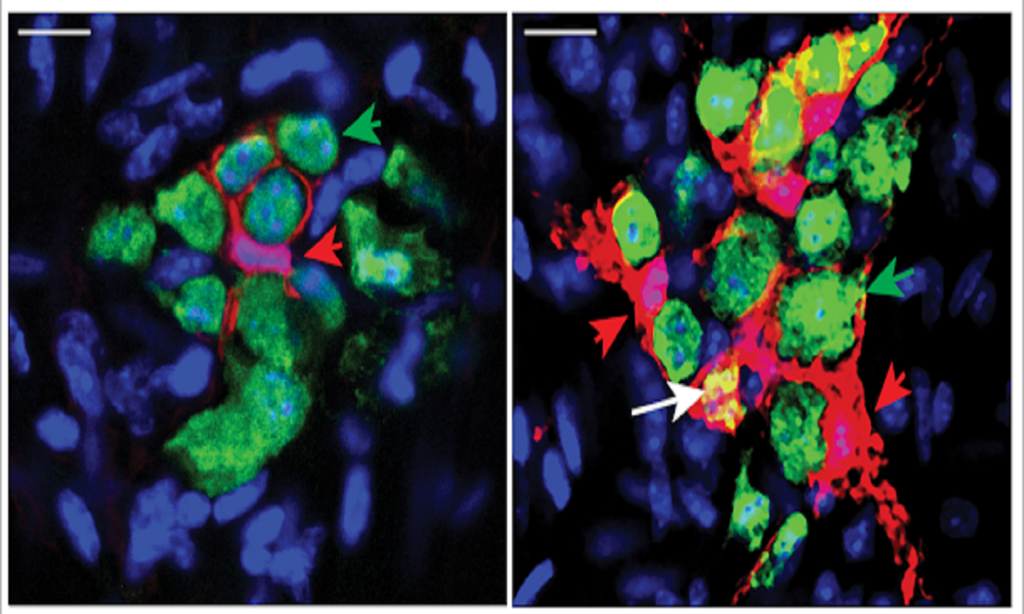
The researchers found that CNGC13, located in the plant’s plasma membrane and expressed in vascular tissues, helps propagate these systemic Ca²⁺ signals. It connects signals generated by mechanical damage and herbivory with downstream defence responses in distant leaves.
But CNGC13 does more than help transmit calcium signals. The study shows that it is also involved in the regulation of glucosinolate-based defence, a chemical defence system that can deter herbivores. When CNGC13 is absent, plants show weaker systemic jasmonate responses, reduced levels of defensive compounds, and increased susceptibility to insect feeding.
The researchers also uncovered another important connection. CNGC13 is required for the plant’s response to AtPep, a damage-associated peptide signal. The channel physically interacts with PLANT ELICITOR PEPTIDE RECEPTOR 2 (PEPR2) and contributes to AtPep-induced calcium and reactive oxygen species signalling.
A New Piece of the Plant Defence Network
Plant defence is a sophisticated communication network in which local damage can trigger signals that travel to distant tissues. The discovery of CNGC13 adds an important component to this network, showing how a vasculature-associated calcium channel can integrate different damage cues and help coordinate systemic defence responses.
In simple terms, CNGC13 acts like part of the plant’s internal alarm system—helping convert local damage signals into a long-distance warning that prepares other parts of the plant for attack.
The findings from BRIC-NIPGR provide new insights into how plants coordinate calcium signalling, jasmonate responses and chemical defences to respond to herbivore attack.
The study was carried out by Misha Kumari, Ramgopal Prajapati, Mahendra Pawar, Bhawana Sharma, Bianca Maria Orlando Marchesano, Yang Yang, Yong-Fei Wang, Alex Costa and Jyothilakshmi Vadassery. The research was published in Proceedings of the National Academy of Sciences (PNAS).