Scientists Uncovered How Conserved Small RNAs Regulate Root Architecture In Maize
RNA directly regulates many important cellular processes including transcription, splicing, translation, epigenetic modifications and many more. New areas of RNA research in plants are arising, and particularly small noncoding RNA molecules offering surprising insights into this intriguing molecule. This work highlights the importance of sRNA mediated gene regulation in patterning the root system in maize.
During the last two decades, small regulatory RNAs (sRNA, not coding for protein) have emerged as an important regulator of various biological processes in both animals and plants. They mostly function by negatively regulating target genes at the post-transcriptional level. Recently, sRNAs have been shown to be involved in various aspects of plant growth, development, and physiology. However, the understanding of sRNA function in crops (such as maize and rice) remained poorly understood.
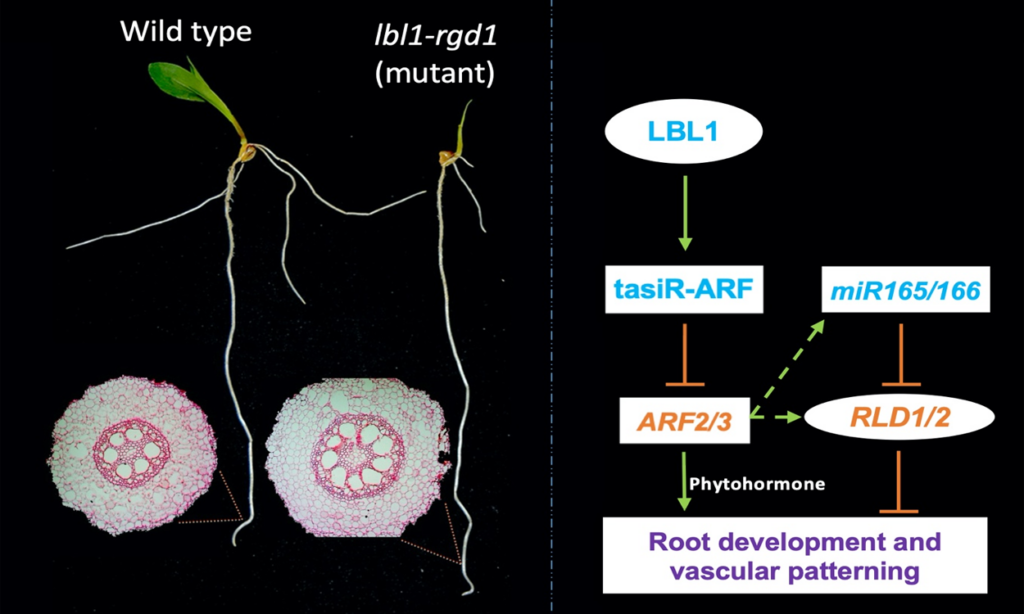
Now a research team led by Dr. Ananda K. Sarkar at the National Institute of Plant Genome Research (NIPGR), New Delhi has uncovered how conserved small RNAs regulate root system architecture in maize. The study highlights that LEAFBLADELSS1 (LBL1), a gene involved in sRNA (trans-acting siRNA: ta-siRNA) production, regulates root growth, meristem function, branching and vascular tissue (which is required for water and nutrient uptake by plants) patterning in maize by modulating target genes and phytohormone auxin.
Sarkar’s group found that Mutation in LBL1 drastically affects these features of the root system. They have also reported another kind of sRNA, known as microRNA165/166 (miR165/166), that also regulates maize root growth, branching, and vascular patterning by restricting its target RLD1/2.
The present work uncovers crosstalk between these two classes of sRNA pathways (ta-siRNA and miRNA) showing their pivotal role in shaping maize root architecture. This article further demonstrates that the sRNA-mediated regulation of root development is conserved between the research model Arabidopsis and the crop (maize).
This work, published in the journal ‘Development’, highlights the importance of sRNA mediated gene regulation in patterning the root system in maize.
The research team included Vibhav Gautam, Archita Singh, Sandeep Yadav, Sharmila Singh, Pramod Kumar, Shabari Sarkar Das, and Ananda K. Sarkar. The study was financially supported by the Council of Scientific & Industrial Research (CSIR) and the National Institute of Plant Genome Research (Dept. of Biotechnology, Govt. of India).












“Our findings indicate the immense potential of engineering sRNA-target genes for improvement of the root system in crops, making them climate-resilient and nutrient efficient,” says Dr. Ananda K. Sarkar.