Scientists Open New Avenue To Study Head Muscle Dystrophy
The study, done in mice and human stem cells, may help in future to test drugs developed for treating muscular dystrophies involving head muscles.
Indian researchers have identified the mechanism by which muscles above the neck, known as head muscles, are formed during development of the embryo in the womb.
The study, done in mice and human stem cells, may help in future to test drugs developed for treating muscular dystrophies involving head muscles.
Till now scientists had only known about the way muscles below the neck develop in the embryo. The new study has found that the process is different for the development of head muscles. It was observed that formation of head muscles was triggered by inhibition of two pathways called Wnt/beta-catenin and Nodal pathways, while muscles below neck require switching on of two different pathways (Wnt and Fgf).
“The study has traced an evolutionary process that allowed emergence of head in vertebrates and identifies mechanistic cues that might be involved in the process. This information can be used to streamline therapy for muscular disorders affecting distinct parts of the body, rather than a ‘one therapy fits all muscles’ approach,” commented Dr. Suchitra Gopinath of Translational Health Science and Technology Institute (THSTI), Faridabad, who was not part of this study.
Sam J. Mathew, Assistant Professor at Regional Centre for Biotechnology (RCB), Faridabad, said, “This work raises interesting possibilities to find new treatment strategies for patients who have weakness and dysfunction of the head muscles.”
The research team included Nitya Nandkishore (InStem and SASTRA University, Thanjavur), Bhakti Vyas (InStem and Manipal Academy of Higher Education, Manipal), Alok Javali (InStem and NCBS), Subho Ghosh and Dr. Sambasivan (InStem).
The results have been published in journal Development. The study was supported by Department of Biotechnology.
Disclaimer:
SciSoup claims no competing interest. To ensure accuracy and scientific relevance, this science blog has been reviewed by the research team involved in the study.













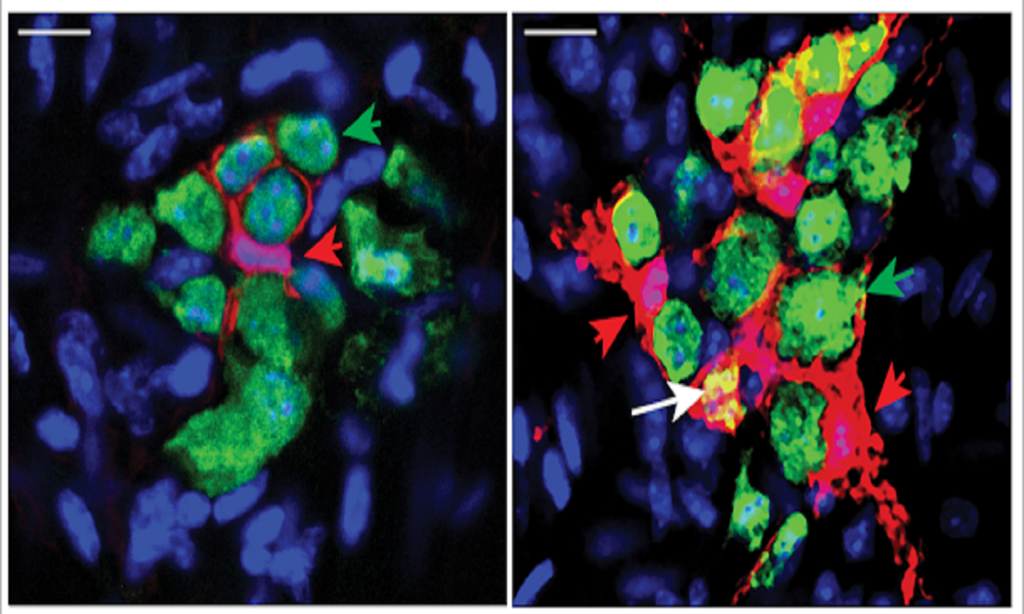
“We observed that in the mutant mice embryos, muscle development below neck fails completely. The head muscle development, however, surprisingly, appeared completely normal. These findings provided evidence that the two muscle groups have distinct paths of development,” he added.